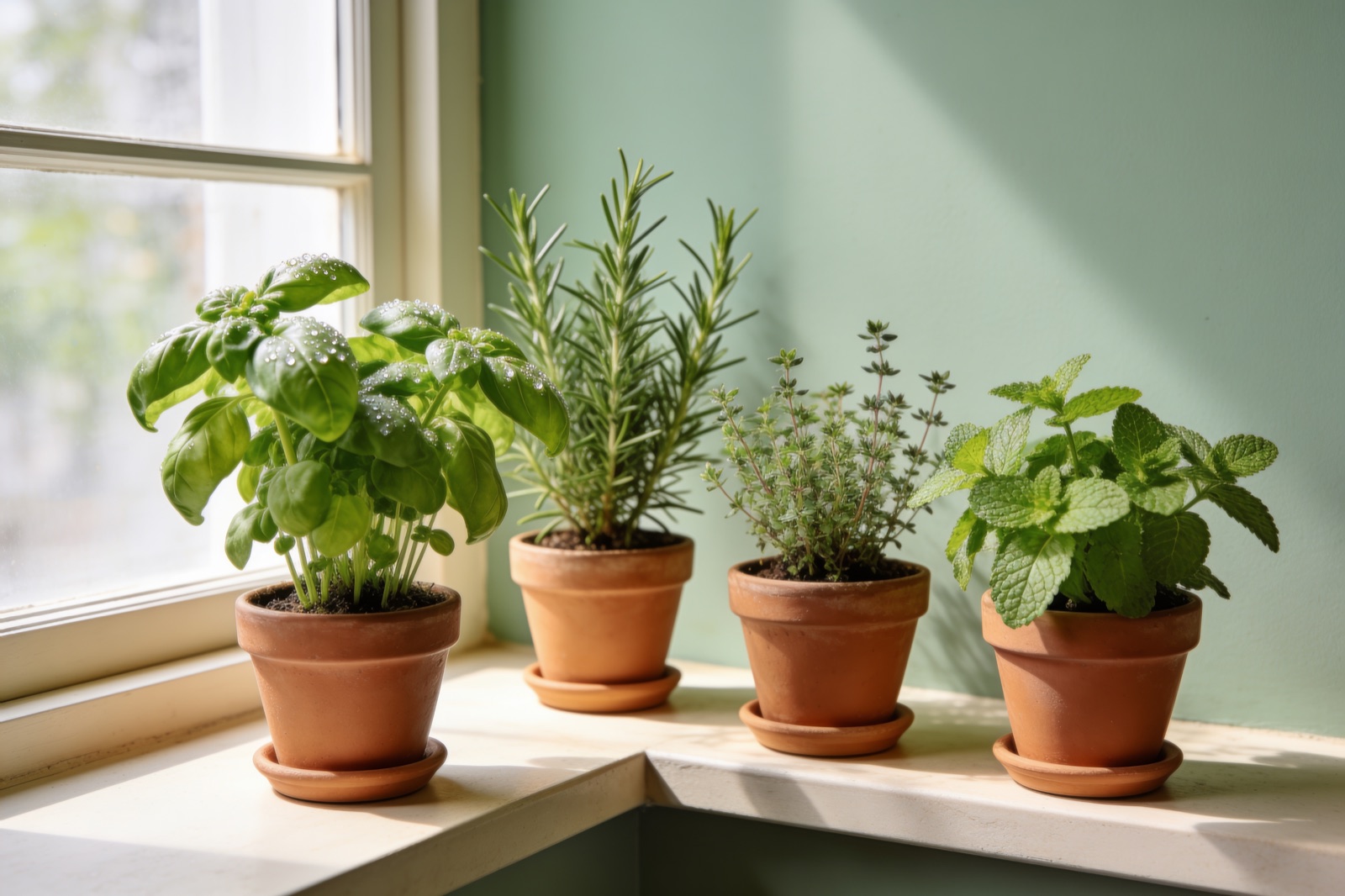
There is a particular satisfaction in reaching past the spice rack to a living plant on the sill, pinching a few leaves, and steeping them into something that soothes. A windowsill apothecary asks very little: a bright ledge, a handful of pots, and a willingness to pay attention. What it gives back is generous, a small daily relationship with the plants that have quietly tended human beings for centuries.
Start with light and honest soil
Most culinary and medicinal herbs evolved under open sky, so light is your first concern. A south or west-facing window that receives six or more hours of sun will make almost any herb happy; with less, lean toward the shade-tolerant options below or add a simple grow light. Choose pots with drainage holes, because more windowsill herbs die from soggy roots than from neglect.
Use a light, free-draining potting mix rather than dense garden soil, which compacts in containers. Water when the top inch feels dry to the touch, then let it drain fully. That single rhythm, checking with a finger before you pour, prevents the most common beginner mistake.
Five forgiving plants to begin with
These herbs are hard to kill, pleasant to use, and rich in tradition. Begin with two or three rather than all five.
- Peppermint is nearly unstoppable and beloved for calming digestion. Give it its own pot, because its roots will happily crowd out anything nearby.
- Chamomile rewards a sunny sill with small daisy-like flowers you can dry for the classic calming bedtime tea.
- Holy basil, or tulsi, is fragrant, resilient, and traditionally sipped as a daily tonic; pinch it often to keep it bushy.
- Thyme is a compact, drought-tolerant workhorse with a long history of soothing coughs and sore throats.
- Lemon balm smells of citrus and is prized as a gentle, uplifting nervine; it tolerates less light than most.
The best medicinal garden is not the largest or the most ambitious. It is the one you walk past, and reach into, every single day.
Tending, harvesting, and the art of pinching
Herbs want to be used. Regular harvesting is not a raid on the plant but the very thing that keeps it lush, since pinching the growing tips encourages fuller, bushier growth. Harvest in the morning after the dew dries, when the aromatic oils are at their brightest, and never take more than a third of a plant at once.
Feed lightly during the growing months with a diluted organic fertilizer, and rotate the pots every week or so, because plants lean toward the light and grow lopsided if you let them. When a plant flowers, you can pinch the buds to prolong leafy growth, or let herbs like chamomile bloom precisely because the flower is the part you want.
From sill to cup
The simplest reward is fresh tea. Tear a small handful of leaves, cover with just-boiled water, and steep covered for five to ten minutes so the volatile oils do not escape as steam. Fresh herbs are milder than dried ones, so use a little more, and taste as you go until the strength feels right to you. To preserve a surplus, gather stems into loose bundles and hang them somewhere warm, dark, and airy until they crackle, then store the dried leaves in a sealed jar away from light, where they will keep their fragrance for months.
Begin small, expect a stumble or two, and let curiosity lead. A windowsill apothecary is less a project to finish than a practice to keep, one that fills your kitchen with green and puts a little quiet medicine within arm's reach.