Of all the systems that keep you alive, the breath is the one that runs itself yet answers when spoken to. Your heartbeat and digestion proceed without your permission, but breathing sits at a rare crossroads. It happens automatically, and it obeys deliberate command. This is why breathwork is so quietly powerful. By changing how you breathe, you send a message straight to the nervous system, and the system listens.
Why the breath calms you
When you feel anxious, your breathing tends to become quick and shallow, drawn high into the chest. This is the body preparing for effort, a sympathetic, fight-or-flight posture. The reverse is also true. Slow, low, unhurried breathing, especially with a longer exhale than inhale, tends to engage the parasympathetic branch, the rest-and-digest side of the system. A long exhale gently slows the heart. You are not imagining the calm; you are causing it.
You cannot always talk yourself out of a racing mind, but you can often breathe your way toward a slower one.
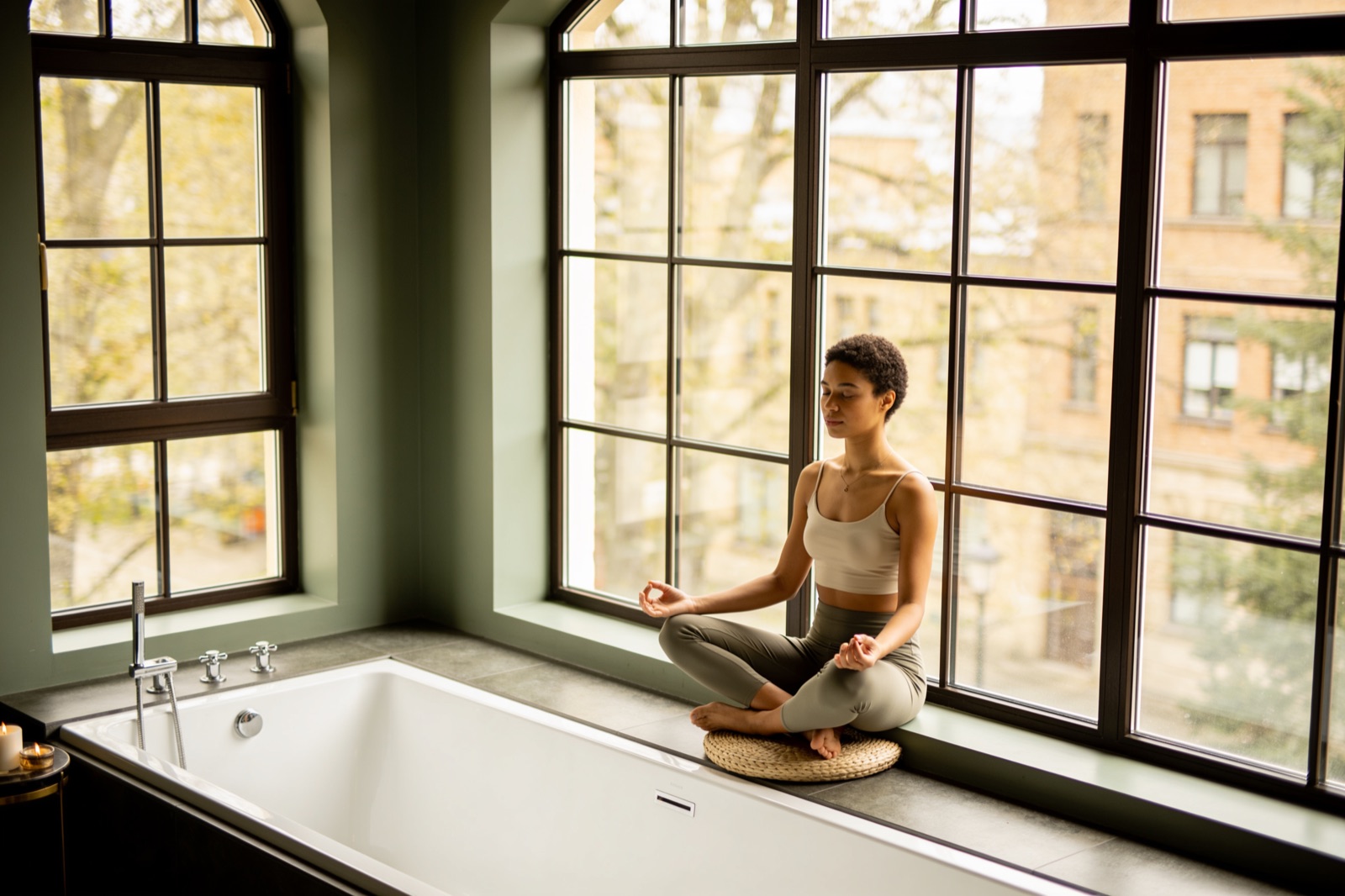
Two principles run through everything below. Breathe through the nose when you can, which warms and filters the air and encourages a fuller, lower breath. And let the exhale lead, since the out-breath is where the calming signal lives. Sit comfortably, let the shoulders drop, and begin.
One: Box breathing
Box breathing is a favorite of people who work under pressure because it is simple to remember and steadying in the moment. Its four equal sides give the mind a shape to follow.
- Exhale fully, emptying the lungs without strain.
- Inhale through the nose for a slow count of four.
- Hold the breath, gently, for a count of four.
- Exhale through the nose for a count of four.
- Hold empty for a count of four, then begin again.
Repeat for four or five rounds. If the count of four feels long, shorten it; if it feels short, extend it. The evenness matters more than the number.
Two: The extended exhale
When you want calm without counting corners, lengthen the exhale. This is the most direct route to the parasympathetic response, and it asks almost nothing of you.
- Inhale gently through the nose for a count of four.
- Exhale slowly through the nose, or through softly pursed lips, for a count of six.
- Do not force the air out; let it leave like a long, quiet sigh.
- Continue for a few minutes, keeping the exhale longer than the inhale.
The exact ratio is yours to find. Four in and six out suits many people, but the only rule is that the exhale outlasts the inhale.
Three: Alternating nostril breathing
Drawn from yogic tradition, this technique has a way of quieting a busy mind, perhaps because it asks for just enough gentle attention to crowd out rumination.
- Rest your right thumb beside your right nostril and your ring finger beside the left.
- Close the right nostril and inhale slowly through the left.
- Close the left, release the right, and exhale through the right.
- Inhale through the right, then close it and exhale through the left.
- Continue for several smooth, unhurried rounds.
Keep the touch light and the pace calm. If holding the hand up feels tiring, simply imagine the alternation. The point is a slow, balanced rhythm, not perfect technique.
How to practice
A few minutes is enough. Breathwork rewards regularity far more than duration, so a short daily habit will serve you better than an occasional long session. A gentle caution: if any pattern makes you lightheaded, return to normal breathing at once, and treat breath-holds gently rather than as a test of endurance.
You already carry the only equipment you need. The next time the day tightens around you, let the breath be your first response rather than your last, and notice how quickly the body agrees to soften.