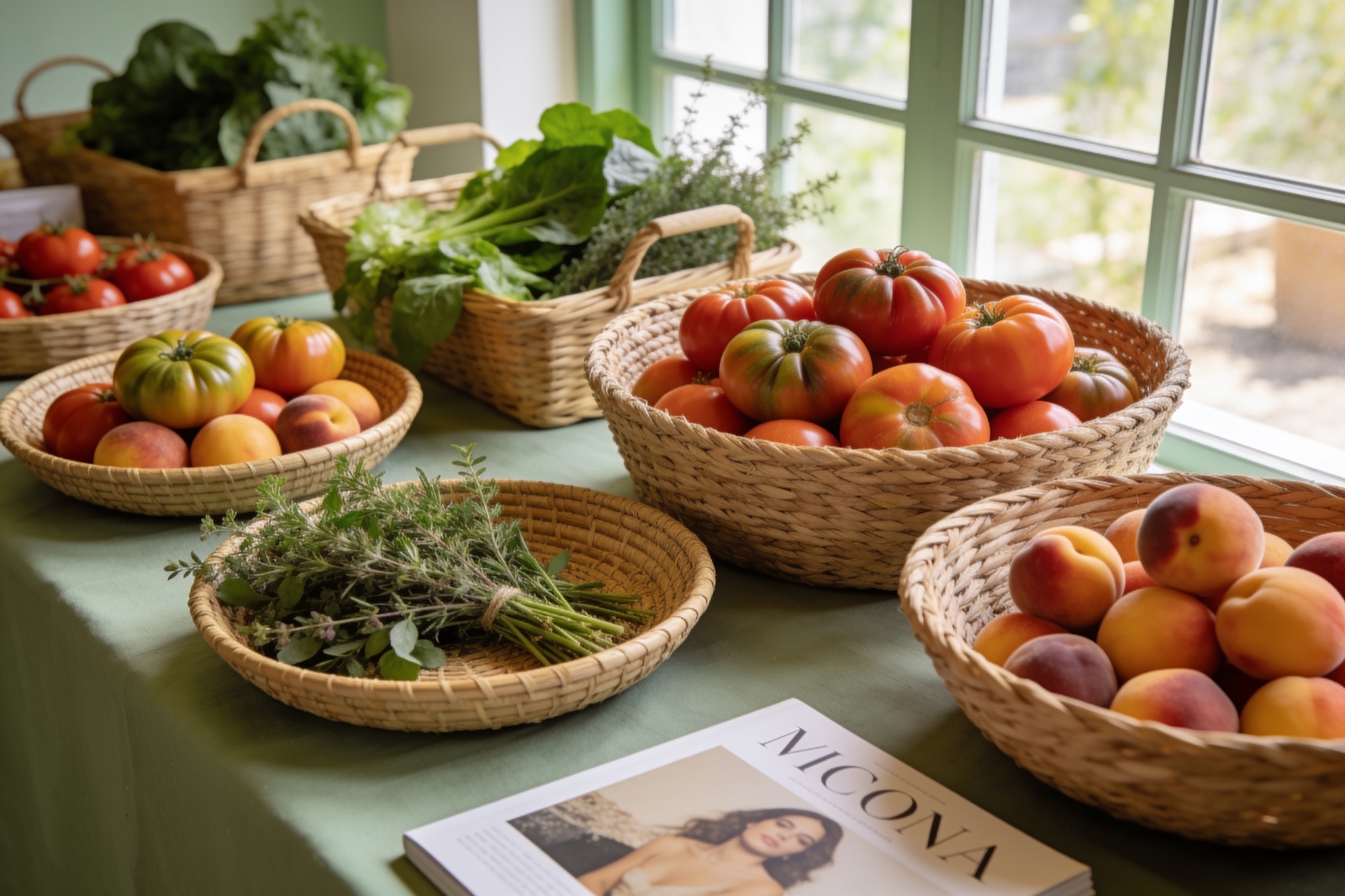
There is a particular week in high summer when the market stops being a chore and becomes a kind of theater. The tomatoes are heavy and split-prone, stacked in colors that range from green to nearly black. Stone fruit perfumes the air three stalls away. Basil is sold by the fistful. In that abundance is a quiet lesson that no cookbook teaches quite as well: when produce is at its true peak, your job is mostly to get out of its way.
Eating seasonally is often framed as a virtue, and there are real reasons behind it. Produce harvested close to ripe and sold close to home tends to taste better and can retain more of its nutrients than food picked early to survive a long journey. But the honest case for it is simpler than any nutrition chart. Summer food, eaten in summer, is the best deal in cooking. It is cheaper at its peak, it is more flavorful, and it asks almost nothing of you in return.
How to shop the stalls
Arrive without a rigid list. The list is what supermarkets are for, where the same tomato waits year-round under the same light. A market rewards the opposite instinct: buy what looks most alive and decide dinner afterward. A few habits help.
- Lead with your nose. A ripe peach, melon, or tomato announces itself. If it has no smell, it will likely have little flavor.
- Buy the ugly ones. The lopsided heirloom tomato and the odd-shaped cucumber taste identical to their photogenic neighbors, and often cost less.
- Ask what is best today. The person who grew it knows which crop peaked this week. It is the most reliable recommendation you will get anywhere.
- Buy less, more often. Summer produce is fragile. Two smaller trips beat one heroic haul that wilts in the drawer.
What summer does best
Certain crops define the season, and each has a natural home in the kitchen. Tomatoes want salt and good oil, little else. Zucchini and summer squash reward a hot pan and a light hand, since they turn to mush when overcooked. Stone fruit, peaches, plums, apricots, and nectarines, are luminous raw and become something else entirely when grilled or roasted for a few minutes. Berries need nothing. Corn, cucumbers, green beans, and fresh herbs round out a table that practically assembles itself.
Peak-season food is the only ingredient that improves the less you do to it.
Storing what you carry home
Half of eating well in summer is not wasting what you bought. A few rules preserve both flavor and money. Never refrigerate tomatoes; cold flattens their taste and turns the flesh mealy. Keep them stem-side down on the counter and eat them within days. Store herbs like a bouquet, stems in a glass of water, loosely covered. Keep berries dry and unwashed until the moment you eat them, since moisture invites mold. Leave stone fruit on the counter to finish ripening, then move it to the fridge only once it is soft enough to eat.
Cooking with a lighter hand
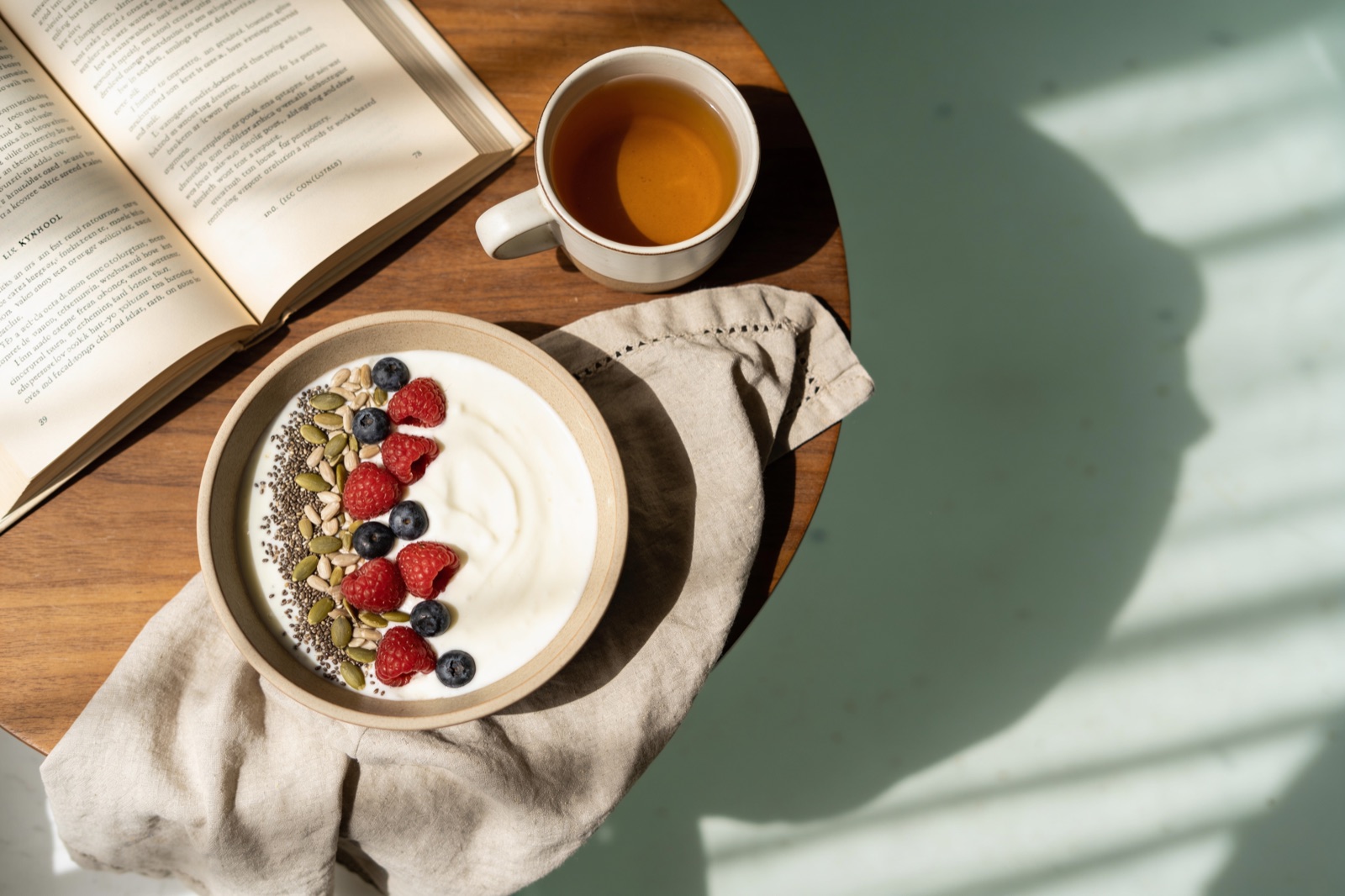
Summer is the season to unlearn ambition. The most memorable meals of the year are often the least constructed: sliced tomatoes with flaky salt and olive oil, corn eaten off the cob within an hour of picking, a peach cut over yogurt. When you do turn on the heat, keep it fast and high. Grill the zucchini, char the corn, blister the green beans, and dress everything while it is still warm so it drinks in the seasoning.
There is also a case for gentle abundance here. A plate built around peak vegetables and fruit naturally tilts toward fiber, color, and water-rich volume, the very things that make a meal both satisfying and light. You are not eating this way because a guide told you to. You are eating this way because in July, it is simply the best food on offer.