Protein is having a moment, and like most moments in wellness, it has tipped into excess. It is scooped into coffee, baked into cookies, printed in bold on the front of pancake mix, and tallied by apps that flash red when you fall short. Somewhere in this frenzy, a straightforward nutrient became a source of anxiety. So let us bring the temperature down and look at what protein actually does, how much a person genuinely needs, and where the marketing has outrun the science.
Protein is structural. Your muscles, enzymes, hormones, and immune cells are built from it, and unlike fat, the body keeps no dedicated storage tank, which is why a regular supply matters. That is the real reason it deserves respect on your plate. It is also why the fear of falling catastrophically short is, for most people eating a varied diet, overstated.
The numbers, without the drama
Public health guidelines set a baseline of roughly 0.8 grams of protein per kilogram of body weight per day for the average adult. That figure is a floor designed to prevent deficiency, not a target for thriving. Most researchers who study this suggest that somewhat more, often in the range of 1.0 to 1.6 grams per kilogram, better supports muscle maintenance, especially as we age or train.
Two groups have genuinely higher needs. Older adults benefit from eating toward the upper end, because the body becomes less efficient at using protein over time, and preserving muscle protects independence later in life. People who train seriously, particularly with resistance, also sit higher on the range. For a sedentary young adult, though, the lower end is perfectly adequate. There is no need to eat like a bodybuilder to be well.
Most people do not have a protein deficiency. They have a protein anxiety, and the two require very different remedies.
Quality and timing, in perspective
Not all protein arrives in the same package. Animal sources, meat, fish, eggs, and dairy, are complete, meaning they contain all the essential amino acids in usable proportions. Many plant sources are lower in one or another. This sounds like a problem and rarely is. Anyone eating a range of beans, lentils, grains, nuts, and soy across a day covers the full amino acid spectrum without effort. The old worry about carefully combining plant proteins at a single meal has been largely retired.
Timing has been similarly oversold. The idea that a narrow anabolic window slams shut minutes after a workout does not hold up well. What appears to matter more is spreading protein reasonably across the day rather than saving it all for dinner, since the body uses it more effectively in moderate amounts at each meal.
Where to actually find it
The good news is that meeting a sensible target is undramatic once you know where protein lives.
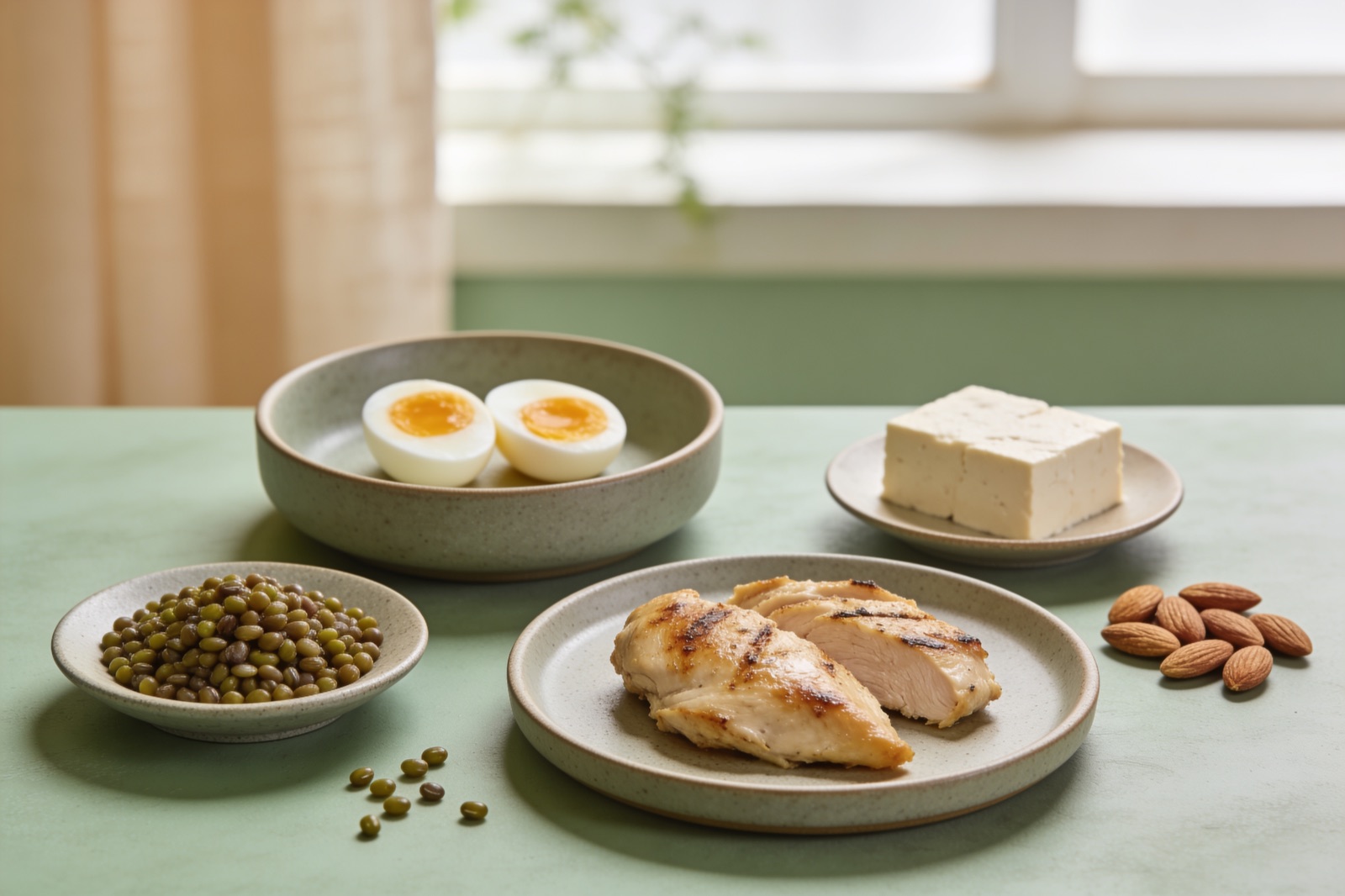
- Legumes. Lentils, chickpeas, and beans deliver protein alongside fiber, a combination animal sources cannot match.
- Dairy and eggs. Greek yogurt, cottage cheese, and eggs are efficient, affordable, and easy to fold into any meal.
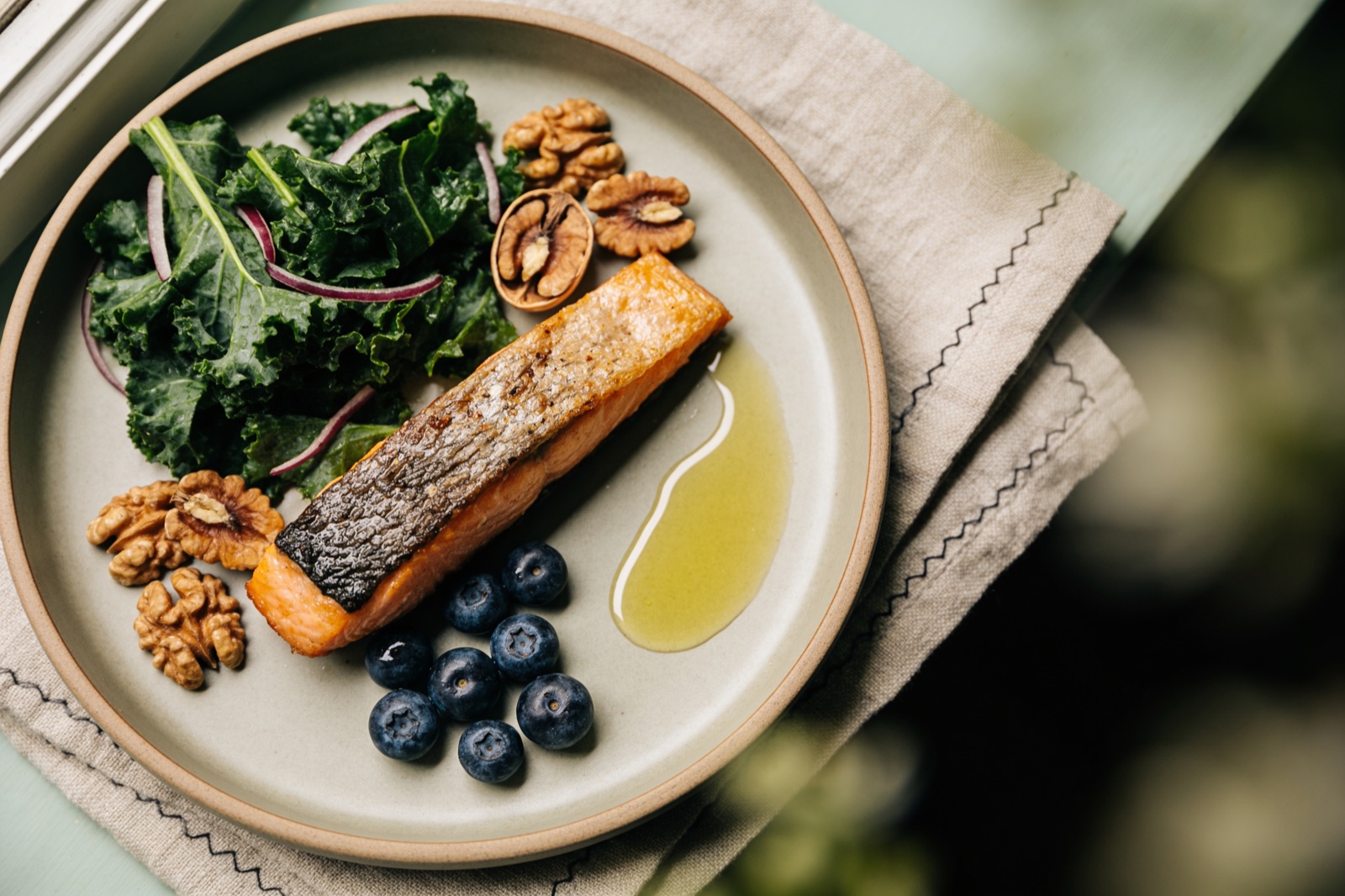
- Fish and poultry. Lean, complete, and endlessly adaptable.
- Soy foods. Tofu, tempeh, and edamame are complete plant proteins that hold their own on any plate.
- Nuts, seeds, and whole grains. Smaller contributors that add up quietly across a day.
A word on the powders
Protein powder is a convenience, not a requirement. It can genuinely help an older adult with a small appetite, a busy athlete, or anyone struggling to reach their needs through food alone. But it is not superior to a bowl of lentils or a piece of fish, and no one needs to fortify their coffee to be healthy. If a scoop makes your morning easier, use it. If it makes eating feel like accounting, put it down.
The honest summary is reassuring. Aim for a source of protein at each meal, favor whole foods, lean toward the higher end if you are older or active, and stop chasing a number as though your health depended on the last few grams. It does not. It depends on the calm, varied pattern you can actually sustain.