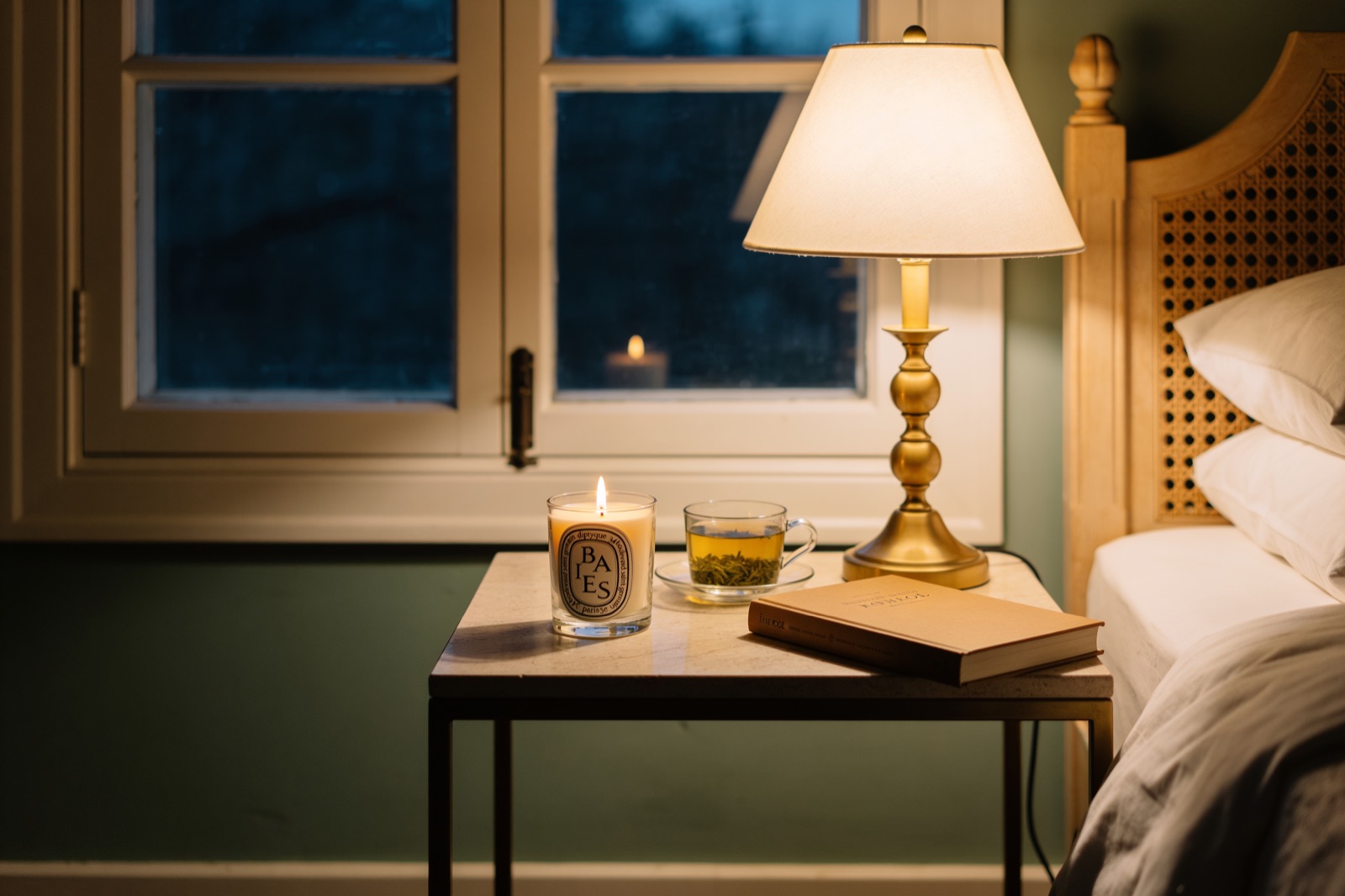
The sun still sets, but for most of us the day no longer does. Long after dusk, the screens keep the light on and the mind at work, ushering us into email at nine and headlines at eleven. We rarely decide to stay switched on; we simply never switch off. A digital sunset is a small correction to this drift, a chosen hour when the devices dim so that you can, too. It is not a punishment or a purity test. It is a return to something the evening once did on its own.
Why the evening screen unsettles rest
Two forces are at play. The first is light. Screens emit brightness, including shorter blue wavelengths, at the very hour the body expects darkness. This light can suppress melatonin and nudge the internal clock later, making sleep harder to find. The effect is real, though it is easy to overstate; a dim phone held briefly is not the same as an hour of bright scrolling in a dark room.
The second force is arousal, and it may matter more. The content itself keeps us engaged. A gripping episode, an argument in the comments, a work message that sets the mind spinning, all of these raise alertness precisely when it should be falling. You cannot easily descend into rest while your attention is being pulled taut. The digital sunset addresses both the light and the stimulation at once.
The day does not end when you finish your tasks; it ends when you stop reaching for the next one.
Drawing the line
Begin by choosing a time, perhaps an hour before you intend to sleep, and treat it as the edge of the evening. When it arrives, the working screens go quiet. This is easier to keep when it is a place as much as a time. Try charging your phone in another room overnight so that reaching for it requires a deliberate walk rather than an idle reach. If you rely on it as an alarm, a simple bedside clock returns that job to a dedicated object.
Make the choice easy for your future self. Use the evening or wind-down settings on your devices to warm and dim the display as night approaches. Silence the notifications that would otherwise call you back. The goal is not heroic restraint but a path of least resistance that happens to lead toward rest.
What fills the hour
A ritual is defined less by what it removes than by what it offers instead. An empty hour invites the hand back to the phone, so give it something gentle to do. Many people return, almost with relief, to the analog pleasures the screen had quietly replaced.
- A physical book or a magazine, read by warm lamplight.
- A warm shower or bath, which relaxes and helps the body cool afterward.
- A few pages of longhand writing to set down the open loops of the day.
- Slow stretching, quiet music, or simple conversation with someone in the house.
- Preparing tomorrow's small things so the mind can stop rehearsing them.
Notice that none of these ask much of you. That is the point. The evening ritual should feel like an exhale, not another item on the list.
Begin gently
If an hour feels impossible, begin with fifteen minutes and let it grow as it earns its place. Some evenings will unravel entirely, and that is no failure; the ritual is a direction, not a rule. What you are building is an association, a felt sense that this hour belongs to winding down. Held loosely and often, it becomes one of the quiet pleasures of the day rather than a discipline you must enforce.
The evening was always meant to taper. A digital sunset simply gives that tapering back its shape, letting the light fade, the mind loosen, and sleep find you already halfway home.